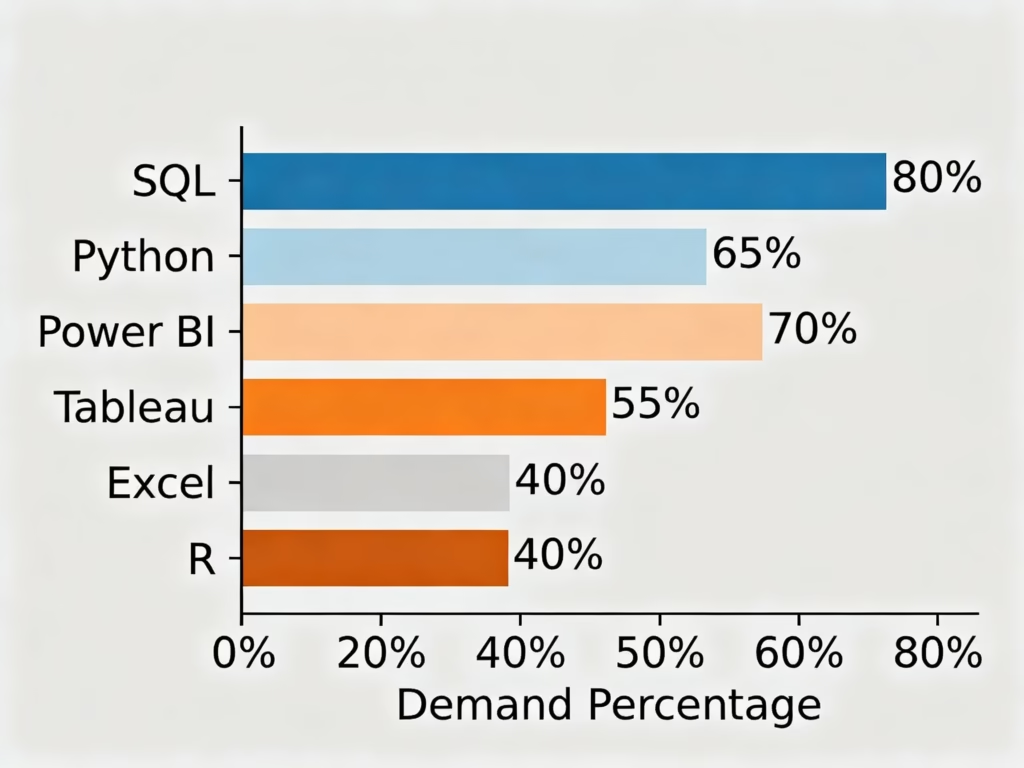
In today’s data-driven world, SQL (Structured Query Language) has emerged as the backbone of data analytics, with over 80% of data analyst roles requiring SQL proficiency as a fundamental skill. Whether you’re an aspiring analyst looking to break into the field or an experienced professional seeking career advancement, mastering SQL is no longer optional—it’s absolutely essential for success in the data analytics industry.

Let’s go through the “Why SQL is Essential for Your Data Analytics Career”
The SQL Landscape in 2025
The demand for SQL expertise continues to skyrocket, making it the most sought-after skill in the data analytics job market. According to recent market analysis, SQL appears in approximately 46% of all data analyst job postings, significantly outpacing other technical requirements like Python (33%), R (20%), and Excel (7%). This dominance reflects a fundamental truth: SQL is the universal language for accessing, querying, and manipulating data stored in databases worldwide.
The proliferation of cloud data platforms has only strengthened SQL’s relevance. Modern data warehouses like Snowflake, BigQuery, and Amazon Redshift are built on SQL architectures, and professionals looking to work with these enterprise-level tools must have strong SQL capabilities. This integration into modern platforms ensures that SQL skills remain not just current, but increasingly critical for future-ready data professionals.
SQL query SELECT * FROM zoo returning animal data with unique IDs and water needs from a table
Why SQL is Non-Negotiable for Data Analysts
Direct Access to Raw Data
One of the most compelling reasons SQL is essential is that it provides direct access to data stored in relational databases, which is the most common data storage method in organizations. Unlike other tools that require data to be exported or formatted in specific ways, SQL allows you to query live data directly from the source, ensuring that your analyses are always based on the most current information available.
This direct access eliminates time-consuming data preparation steps and reduces the risk of data corruption that can occur when transferring data between systems. You can retrieve specific information from millions of records in seconds, making SQL an incredibly efficient tool for analysts who need rapid insights to support business decisions.
Handling Large-Scale Datasets
Traditional tools like Excel have clear limitations when working with big data. While Excel can handle spreadsheets with thousands of rows, SQL can process datasets containing millions or even billions of records efficiently. A single SQL query can fetch results from millions of rows within minutes, providing speed and scalability that spreadsheet-based analysis simply cannot match.
This capability is particularly crucial in modern enterprises where data volumes are constantly growing. Data analysts who rely solely on Excel will quickly find themselves unable to access or manipulate the datasets their organizations need to analyze. SQL empowers analysts to work with enterprise-scale data seamlessly, removing the infrastructure barriers that would otherwise limit their analytical reach.
Data Integrity and Accuracy
When you manipulate data directly in SQL at the source, you maintain higher data integrity compared to copying data into separate applications. SQL’s structured approach minimizes human error, and data transformations executed in SQL are easily auditable and reproducible. If a colleague questions your analysis, you can simply share your SQL query, and they can verify your work instantly—something that’s far more challenging with spreadsheet formulas where errors can be hidden in complex cell references.
Furthermore, SQL’s transaction management capabilities ensure that data modifications are reliable and consistent, which is critical for maintaining data quality in analytical processes.
The Power of SQL in Data Analysis Tasks
Joining and Combining Data
In real-world scenarios, data is rarely stored in a single table. Organizations typically have data distributed across multiple tables—customer information in one table, order history in another, and payment details in a third. SQL’s JOIN functionality allows analysts to combine data from multiple sources to perform comprehensive analyses that would be nearly impossible with traditional tools.
For example, an analyst might need to join customer demographics with purchase history and product information to identify which customer segments are most valuable. This requires sophisticated queries that SQL handles elegantly, enabling analysts to derive deeper insights that drive strategic business decisions.
Aggregation and Statistical Analysis
SQL provides powerful aggregation functions similar to Excel pivot tables but with the ability to work across unlimited rows and multiple tables simultaneously. Analysts can calculate sums, counts, minimums, maximums, averages, and custom aggregations across massive datasets in a single query, making statistical analysis far more efficient and scalable than manual spreadsheet manipulation.
Data Cleaning and Preparation
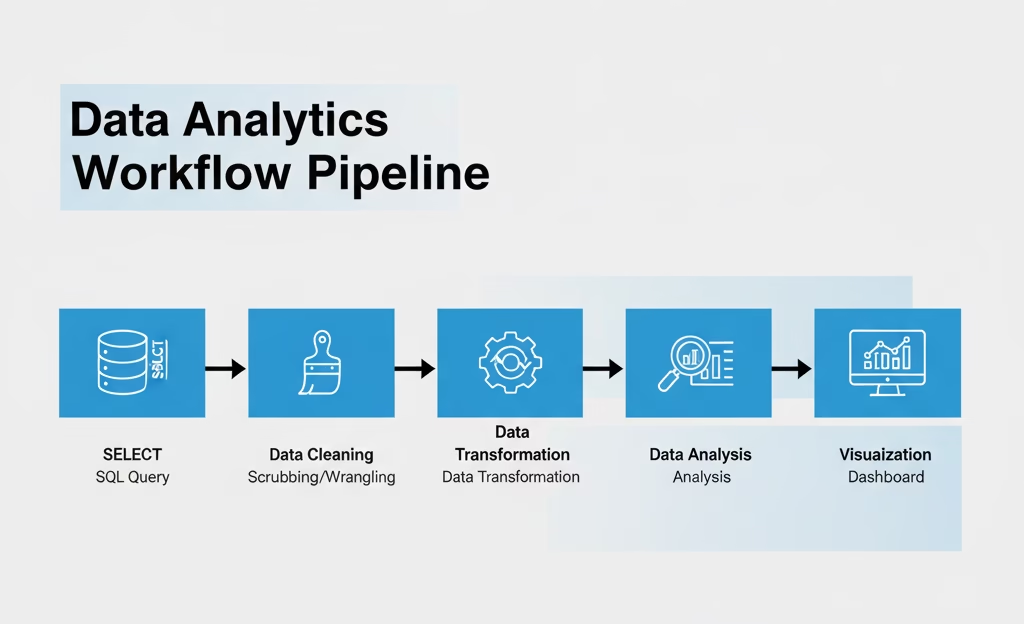
Before any meaningful analysis can occur, raw data must be cleaned, transformed, and prepared. SQL excels at data cleaning tasks, allowing analysts to remove duplicates, handle missing values, standardize formats, and filter out irrelevant records. These data preparation tasks are fundamental to the analytics workflow, and SQL is the most effective tool for executing them at scale.
Career Growth and Earning Potential
Market Demand and Job Security
The job market for SQL professionals is exceptionally strong. The US Bureau of Labor Statistics predicts a 23% increase in data analyst positions by 2032, with this growth rate likely to accelerate as data volumes continue to expand. SQL professionals enjoy exceptional job security because every organization that uses databases—which is virtually every modern company—needs people who can query and analyze that data.
Competitive Salary Advantages
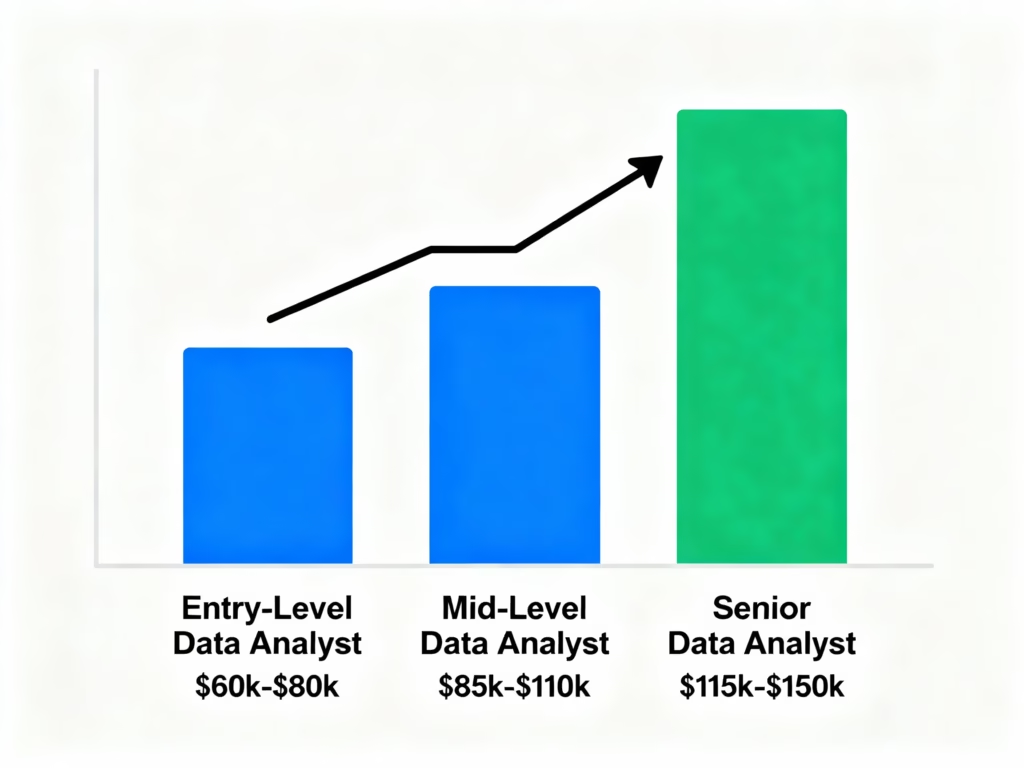
SQL proficiency directly translates to higher earning potential. In the United States, the average SQL developer salary stands at $101,000 annually, with entry-level positions starting at $82,400 and senior positions reaching $126,000 or more. For those specializing in advanced SQL dialects, salaries can be even higher—Oracle PL/SQL developers earn an average of $129,900, while PostgreSQL specialists command $128,500.
In India, where many data analysts are based, SQL skills similarly command premium salaries. Entry-level data analysts can expect ₹3-6 lakhs annually, while mid-level analysts with strong SQL expertise earn ₹6-12 lakhs, and senior analysts command ₹8-18 lakhs or more. The salary growth trajectory is particularly steep for those who master SQL alongside other complementary skills.
Career Advancement Opportunities
Proficiency in SQL opens doors to numerous high-paying career paths:
- Data Analyst: ₹4-15 LPA ($60k-$100k USD)
- Business Intelligence Analyst: ₹5-18 LPA ($65k-$110k USD)
- Data Engineer: ₹5-25 LPA ($90k-$150k USD)
- Database Administrator: ₹4-47.8 LPA ($80k-$130k USD)
- Data Scientist: ₹8-25 LPA (highly variable based on specialization)
With experience, SQL professionals can advance to senior roles like Senior Data Engineer, Database Architect, or Chief Data Officer positions, where salaries can exceed ₹50 LPA in India or $200,000+ in the United States.
SQL Complements Your Entire Analytics Stack
Working with Modern BI Tools
Many analysts mistakenly believe that learning tools like Power BI, Tableau, or Python eliminates the need for SQL. In reality, SQL works in complementary harmony with these tools. These visualization and analysis platforms are effective for presenting insights and building dashboards, but SQL is often necessary to prepare and clean the underlying data before any further analysis occurs.
A truly skilled analyst knows how to leverage SQL to extract and prepare data, then use Power BI or Tableau to visualize insights and communicate findings to stakeholders. This combined skillset makes you significantly more valuable to employers who need professionals capable of working across the entire data lifecycle.
Integration with Cloud and Big Data Platforms
As organizations migrate to cloud data warehouses, SQL remains the standardized query language across platforms. Whether your company uses Snowflake, BigQuery, or Amazon Redshift, your SQL knowledge is directly transferable. This cross-platform applicability means that SQL skills provide long-term career stability—the specific tools and platforms may evolve, but SQL will remain central to data work for the foreseeable future.
Building a Competitive SQL Skill Set
Why Beginners Often Excel with SQL
Despite being a powerful language, SQL is relatively easy to learn compared to general-purpose programming languages like Python or Java. The syntax is intuitive and readable, making it accessible to beginners while remaining powerful enough for advanced use cases. Many analysts report that they can write meaningful SQL queries after just a few weeks of focused study.
Certification and Credentialing
While certifications aren’t strictly necessary, they can increase your earning potential by 15-25%. Relevant certifications include Microsoft Certified: Azure Data Fundamentals, Oracle Certified Professional for MySQL, and PostgreSQL Certified Professional. These credentials signal to employers that you possess verified SQL expertise and are committed to professional development.
The Self-Service Analytics Revolution
Organizations increasingly expect their data analysts to be self-sufficient and capable of generating insights without constant IT department support. By mastering SQL, analysts reduce their dependency on IT teams and become capable of autonomous query writing, data exploration, and insight generation. This independence is highly valued in modern organizations and often translates to career advancement and higher compensation.
Looking Forward: SQL’s Future Relevance
While data technology continues to evolve with the emergence of NoSQL databases and advanced machine learning platforms, SQL’s relevance shows no signs of diminishing. Even organizations building modern data stacks with cutting-edge technologies recognize that ANSI-compliant SQL remains the standard for data manipulation and analysis. The skill that’s been essential for decades will continue to be essential for decades to come.
Conclusion
SQL is far more than just a tool—it’s a fundamental skill that defines your career trajectory in data analytics. Whether you’re earning ₹3-6 lakhs as a fresher analyst or commanding ₹50+ lakhs as a senior professional, SQL expertise underpins your value to employers. With over 80% of data analyst positions requiring SQL proficiency, strong job market growth, competitive salaries, and the ability to work across modern data platforms, the case for mastering SQL is overwhelming.
For data professionals in 2025 and beyond, the question isn’t whether to learn SQL—it’s how quickly you can become proficient in this essential skill to accelerate your career growth and earning potential. Start learning SQL today, and you’ll be investing in a skill that will remain valuable throughout your entire professional life.